Showing posts with label consumerism. Show all posts

Thursday, September 24, 2009

Halloween Costumes

I'm sure this is a blogging faux pas but i'd really like to resurrect a Halloween post i had up last year. If for no other reason than to give parents, and women, ideas for empowering costumes rather than resorting to the same old (sexist, sexualized, and objectified) standard options.

Halloween, if nothing else, allows children to play dress-up and use their imagination to be anything they want to be. Or in the case of the mainstream costume industry, gives kids the chance to further perpetuate gender roles, reinforce stereotypes, and dress little girls in hyper-sexualized outfits.


I was at a party store last weekend and spotted a wall of "featured costumes." I managed to snap a couple photos with my phone before the salesperson asked me what i was doing. "I am documenting the lack of options for little girls when it comes to Halloween costumes" I responded, "so that i can blog about how this parallels girls' and young women's lack of options in the real world." ("DUH!" i thought sarcastically...) I apologize for the quality of the photos, it was the best i could do with a phone on the fly :)


Of course there ARE options... for example, take page 1 from an online search for girls' Halloween costumes, letters A through H: Aurora, Barbie Anneliese, Barbie Cheerleader, Barbie Rapunzel, Blissful Bride, Bratz Jade, Bratz Sasha, Bratz Staurday Night Style, Cinderella, Devilicious Child, Fanciful Fairy.


Is all the pink making you a bit pukey? Sorry about that...


The store where i snapped the photos of those three costumes had several more options. For example, there were Power Ranger costumes, doctor costumes, and handyman costumes for the boys. For the girls? More of the same. I thought the whole girl = nurse/boy = doctor thing was so last decade?? Guess not. Not to say there is anything wrong with being a nurse, because there isn't. But to lead girls to believe that they don't have the option to be a doctor and boys to believe that they cannot be a nurse is outdated and damaging. The Tycoon costume cracked D and me up the most. I guess the female equivalent to "Tycoon" in Halloween costume talk was the MegaStar?? Because clearly all that girls have to offer is their looks and bodies. The model in the photo on the costume can't possibly be older than 10. No 10 year old should be wearing that much (or LITTLE) pleather... And i doubt many 10 year olds are that developed... So, moral of the story for your 10 year old girl who wants to be "successful" when she grows up? Boys use their brains to make money by becoming Tycoons. Girls use their appearance to make money by wearing very little clothes or by attracting Tycoonish boys.


Obviously it only gets worse as the target audience gets older. Check out the changes in costumes from toddler to girl to tween to teen to adult. The only thing that changes is the amount of fabric that goes in to making the costume. For example, even seemingly empowering costumes, like superwoman (which they call "supergirl") or warrior princes (who then becomes a "Geisha"), become hypersexualized as the target consumer gets a bit (read: no more than a couple of years) older. These attempts at options fall even shorter as girls grow up.


I get it. Some people (read: freshmen college girls who are experiencing their first taste of sexual freedom) see Halloween as an excuse to make any outfit into a sexy costume. Want to be a pirate? Ok! Sexy Pirate it is! Sexy Cat Woman, Sexy Nurse, Sexy Witch, Sexy Bunny, Sexy Schoolgirl, Sexy Anna Rexia (get it? sexy anorexia... riiiiight) and my all time favorite, the Sexy Detective (my freshman year 1st college Halloween party costume...) P.S. You should absolutely click through those links to the photos of those costumes but they are definitely not appropriate for work so careful.


Because i couldn't possibly write about Baby High Heels in any other post than the Halloween ridiculous costumes post, i wanted to include a bit about the new "infant trend..." If the topic of girls' Halloween costumes doesn't bother you enough check out baby high heels (designed for babies 0-6 months)!!!! I can't wait for a friend or family member to have a baby girl so that i can buy these for her!


/sarcasm...


So that we don't end on a negative note, what are some empowering costumes your kids (or kids you know) will be wearing this Halloween?


Thursday, February 26, 2009

And Now a Word from our Sponsors...

People always ask me how relevant i believe feminism to be: "haven't we come a long way since outwardly sexist discrimination?" Maybe. I will agree that in a lot of ways sexism (as well as other forms of oppression) are a lot more subtle and insidious than they used to be. However, even though we have come far we aren't even close to there yet. Women continue to make less than men, women continue to fight for reproductive rights and control of their own bodies, and women remain out-numbered in politics, economy, and other positions of power.

One arena in which sexism never ceases is the media. Commercials continue to use tired gender stereotypes in their advertising believing people react positively to this, and maybe they do, because if they didn't market researchers would need to come up with different strategies.

I came across a video yesterday that put together sexist commercials from the 1950's, 60's and 70's. These commercials are clearly sexist, one voice over states, "every woman needs to be herself at times, and that means baking!" The commercials start about 1:00 min into the video.


But then i remembered commercials i saw just this past month during the Super Bowl that were just as bad!


and:


and then earlier this year the commercial that made me want to hurl my TV out the window, never have children for fear of ruining them, and write many angry letters to Playskool:


I wrote more about this disturbing commercial last year and there was some controversy in the comment section. Playskool is advertising a "place where she can entertain her imagination!" as the little girl is shown with the washer and drying saying, "let's do laundry!"

So sure, maybe we have "come a long way" since women were denied the right to vote but we certainly aren't there yet.


Wednesday, January 28, 2009

Meet Dov Charney.


Yes. Please. Let's meet the asshole.


Dov Charney is the CEO of American Apparel. He has also had three sexual harassment lawsuits filed against him just in one year by employees. He also frequently walks around the office in his underwear and makes a habit of calling his female employees, "sluts," because he considers the term to be endearing and a normal part of "welcomed conversation."


I get it, companies need to be edgy to make it these days. But that edge doesn't have to come at the expense of objectifying women. When questioned on it, Charney claims his style isn't a shtik but rather a business model. He urges that, "the financial guys will miss an opportunity if they are offended by superficialities." Superficialities? Hmm, not so much. Putting up a billboard in the middle of Manhattan with an almost nude model bent over, facing the other direction is objectifying. No doubt about it and no superficialities either. And if the billboard itself doesn't bother you, maybe the fact that it was spray painted with, "GEE, I WONDER WHY WOMEN GET RAPED," will. Not that Charney can control what people tag his billboards with but he should hear the message loud and clear. Advertising like his perpetuates a culture of rape and victimization.


So, let's "Meet Dov Charney," the CEO of American Apparel.


The text on his advertisement (top of page) acquainting us reads, "Women initiate most domestic violence, yet out of a thousand cases of domestic violence, maybe one is involving a man. And this has made a victim culture out of women.” Wait, what? Where the hell is he getting his information? Because that's clearly not the case.


Also, since when do CEOs of companies make it a point to appear in the company advertising? And since when are they so creepy. He looks like a rapist and she looks like she's drugged. Not helping your point, Charney.


AA's clothing has gotten such mass approval for being made in "non-exploitative settings." In a way, that's true. Rather than being made in sweatshops overseas like so many other companies, AA clothes are made in an air-conditioned factory in LA and employees are paid a fair wage as well as receive full health benefits. I can't say anything bad about that, it's a shame more companies don't follow in AA's lead in terms of anti-sweatshop labor. But "exploitative" can mean other things, too. Like regularly being sexually harassed at work, being forced to laugh and cheer as your boss runs through the office in his underwear, and being called "slut" as a term of endearment at work.


More on Charney here...

Tuesday, December 23, 2008

How Dare I be Jewish During Christmas Time!?

I stopped by the Christmas Tree Shop yesterday on my way home from work. I thought, "maybe they have a Chanukah corner? Even grocery stores give us a quarter of an aisle..." And they did! They had a whole section of Chanukah stuff and because it was already the second day of the holiday, it was all 50% off! Score. I picked out a few things and went to the cash register. I got in line behind two shoppers, one who asked for a price check that took forever, and one who paid by check. While we waited to pay, the four of us (the cashier and the two other women) were joking around, talking about the craziness of the holidays, the lines, small talk. Then came my turn. As soon as i put my basket down on the counter, the cashier's face and tone completely changed. During the whole wait my basket was on the floor, by my legs, so no one saw what i had. But as soon as i started pulling out Chanukah plates the cashier went from jovial to flat affect and then to rude. It started with an "Oh!"

"Oh what?" I thought. I realize i'm a bit more hyper-sensitive to discrimination than the average person so i thought i might be reading into it. I kept up a friendly demeanor. As she starting ringing up my purchases i realized the items weren't going through as 50% off. I told her so. To which she responded, "Ugh! Of course!" Here i couldn't help but wonder what she meant by "of course." Did she mean, "Of course, you're Jewish, buying Jew products, Jews are cheap, and you want a discount!" Or did she mean "Of course, way to hold up the line, lady!" I would have absolutely defaulted to the latter had i not been in line after the other two shoppers that held the line up for WAY longer than me. One waited on a price check that took 10 minutes and the other paid with a personal check... The cashier's "of course" could have been in reference to customers always having an issue in her line... or it could have been anti-semitic. There's no real way to know.

I told her, "there's a sign, right there, it says '50% off,' i can see it from here"
"I can't see it! I don't have my glasses" She snapped back
"Oh ok, sorry about that... do you think you can ask someone to check, please?" I was half upset at being treated so rudely, half still wondering if i was reading into it more than i should.
She asked the manager to check and wouldn't make eye contact with me while we waited. The manager told her it was, indeed, 50% off and she rung me up. I paid for my purchases and said "Happy holidays" as i walked away. She grunted back, "Merry Christmas!"

Ok, i get it, there are people who think it's all my fault they can't have Christmas trees up in public places and have to wish each other "happy holidays" instead of "merry Christmas." But honestly, living in a predominantly Christian country i am WAY beyond carrying if someone wishes me a "merry Christmas." I don't correct them, i don't wish them a "happy Chanukah" back, and i certainly am not bothered by it. I swear, I don't interfere with your Christmas spirit. I sing along to carols on star 99.9, i wear lots of red, and i really love eggnog. Though i avoid the malls this time of year like the plague, i am very not bothered by Christmas spirit, in fact, i enjoy it when (IF) people are slightly nicer to one another. I wonder if that's what the cashier was annoyed by? That i had the audacity to shop in the Christmas Tree Shop and purchase only Chanukah items! Maybe it wasn't Jews she had a problem with but me, for representing the politically correctidness that she now has to trouble herself with? Who knows. I don't. Because maybe she was just anti-semitic.

Either way, treating me differently, and rudely, for being Jewish was wrong and discriminatory - i don't care what her rationale for it was. I wish i had the chutzpah* to have said something, or to have asked to speak with a manager. But again, i couldn't tell if i was being overly sensitive or if it was prejudice at its best. But i guess that's a lot of what discrimination is. Trying to figure out why what happened is wrong and how to rationalize it.

The only other time i was taken aback by blatant antisemitism was the first week of college, freshman year. We went to the dining hall with some new friends from the floor and one of them told a Holocaust joke. I just sat there, baffled that people still did this. I grew up in a very Jewish community, these types of things didn't happen. Everyone laughed until one of my gentile** friends from high school said, "that's not funny." The person who told the joke said, "yes it is! It's just a joke." And my friend said, "No, it's not. Not when you have a Jewish person sitting at the table, and not ever in general." They never said anything anti-semitic around me again for the four years i knew them.

I walked away from the Christmas Tree Shop experience thinking, "yes that sucked, but it's pretty easy for me to hide being Jewish if i really needed to, like if my life was in danger." Many other minorities don't have this option.

*chutzpah: gall, brazen nerve, effrontery, guts.
**gentile: non-Jewish


Monday, March 31, 2008

Socializing Gender Through Toys

As any first year sociology student will tell you, gender is a social construct. And that is the context in which I’ve always thought about it. Until now that is. I am at that age where lots of women around me are either pregnant or starting to think about having children. Also, on a more personal and very exciting note, my brother and sister-in-law are pregnant! There hasn’t been a baby in my family since my younger cousin (who is now 22) so you can see that it’s been a while.

I’ve had quite a few conversations with my sister-in-law as well as with others that always end in “yes, we agree that gender stereotypes exist but no, we don’t agree that this is necessarily ‘bad’” Sometimes that’s enough for me (as a feminist I’ve learned to pick my battles) but usually it’s not. Now especially, since I’m going to be an auntie, it’s not enough.

Gender socialization begins the moment a child is born, and I’m not only referring to the color outfit s/he is placed in at the hospital. The way children are talked to, touched, and played with all establish norms and expectations, thus socializing children from day one. Parents will engage in more “rough play” with their boys while using more language with their girls. This is limiting for both. Boys learn to “be tough” while girls learn to emote and use their words. Both sexes need both sets of skills, which is why gender socialization is so limiting for everyone involved. Everyone including the parents who need to develop both sets of ways in which to relate and bond with their children.

In Jewish tradition (or rather superstition) you should not purchase gifts or items for an unborn child so to not draw the attention of dark spirits. However, my sis in law gave me the go ahead to buy (just not give) her baby gifts. So try to buy I did… as I wandered through Target’s baby section, I noticed some adorable bibs. There were two sets. One 4-piece bib set was blue and green and had the following saying written on the front: "Fireman" "Policman" "Astronaut" "Dinosaur." The other 4-piece bib set was in pink and purple and said "Lipstick" "pretty but messy" "I clean up cute" and something else as equally gross... In this case, as in many, it wasn’t the colors that bugged me (because I don’t see anything intrinsically wrong with a baby girl in pink or a baby boy in blue) but rather the message that the toy or clothing sends. The boys' bibs encouraged creativity and opportunities for the future (granted stereotypical jobs are pretty restrictive also) but the girls' bibs were very clearly appearance motivated. They are basically saying she had no chance of becoming an astronaut but she can certainly be just as successful as her male counterpart by taking care of her appearance and buying in to female gender norms.

It's not always as apparent as my bib example but obvious or not, the message remains the same. Engendering children limits their creativity and opportunities. The messages baby items (toys, clothes, games) convey are restrictive when they should instead develop a child’s imagination. One that sticks out most vividly in my mind was a commercial that aired not to long ago for Playskool’s Rose Petal Cottage The commercial used all sorts of clichéd messages about girlhood. There were two commercials – one directed at children (well girls rather) and one geared at parents. I posted them below because this is a “you gotta see it to believe it” type of thing. The kids’ jingle sings lines like “taking care of my home is a dream, dream, dream.” The commercial for parents says “now there’s a place where her dreams have room to grow... where she can decorate and entertain her imagination.” During that line of the commercial, the little girl is doing her laundry and actually says “do the laundry!” in her happy, petty, training to be a housewife, sort of way. Really Playskool? Encouraging girls to entertain their imaginations by doing laundry and taking care of the home? We have got to do better than that.

When I YouTubed this commercial, I found a fun reaction that someone made. This time the line “a place where she can entertain her imagination” is spoken behind a young girl in a chemistry lab. That is more like it.

Targeting Girls:


Targeting Parents:


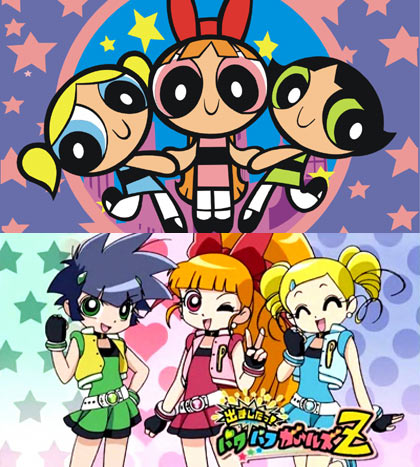
This isn’t unique to Playskool either, Fisher-Price did it too (quite recently in fact). Some of you may have seen commercials for My Pretty Learning Purse “Keys, lipstick, money, music …this adorable purse has everything baby needs for learning and role play fun!” Please don’t argue with me about our society not being inundated with highly gendered toys until stuff like this is off the shelves. Girls have very few options in terms of toys and imagination: housekeeping, princesses, or dolls... all of which require them to develop their nurturing sides and wait patiently for a prince to rescue them from their castle (or Rose Petal Cottage). And don’t even get me started on Bratz dolls... at least the Powerpuff dolls had purpose and kicked some ass...

Boys don’t have it all that easy either. Gender norms are just as restrictive for boys. Don't we want our children to be creative and explore as much as possible? Boys playing dress up with heels and makeup are often reprimanded. But why? Shouldn't we let them be just as creative as we allow our girls to be? Why are we limiting our children's imaginations at all? Most toys geared at boys consist of trucks or cars, action figures, or violence. The famous Tonka Truck commercial for a toy that’s been on the market since the 80s exclaims, “boys... what can you say? They’re just built different.” We need to teach our boys communication, cooperation, and the use of words. By encouraging violence, confrontation, and competition we set our boys up for a future in which they are limited in their ability to resolve conflict. Excusing fighting and rough housing with the “boys will be boys” mentality only causes us to pass up important opportunities to have potentially life changing conversations with our children.

All that said, I am finding it extremely difficult to find gender neutral toys, clothes, and other items for my future nephew so if anyone has any suggestions, I’m all ears. I suppose I’ll forever be the auntie that buys progressive or education toys, or even worse... dun dun dun... BOOKS, haha. In the past I’ve tried to buy music toys which are pretty gender neutral or art supplies. But I’d love to hear what you all, readers, have given as a gift (or received) that was your favorite gender neutral toy.

Tuesday, March 25, 2008

MissBimbo.com, Where Breast Implants are Only 11,500 Bimbo Dollars!

Thanks Jacks for the heads up on this one...

Imagine you were a 7 year old girl. Done? Good. Now imagine someone told you about this awesome game where you competed to become the "hottest, coolest, most famous bimbo." Done? Ok. Now imagine you could attain that by purchasing your "bimbo" boob jobs and by putting her on crash diets. Fan-fucking-tastic. You think i'm joking? I seriously couldn't make this stuff up if i tried.

A new website that launched last month in the UK encourages girls to compete against each other by earning "bimbo dollars" to purchase things like sexy outfits, plastic surgery, and diet pills. (Breast implants cost 11,500 bimbo dollars, diet pills cost 200 bimbo dollars). When new members register, they are provided with a naked virtual bimbo to "look after."


The aim is to become 'the coolest, richest and most famous bimbo in the whole world' and gamers must keep her at her the target weight through diet pills.


When they run out of virtual cash, contestants send texts costing £1.50 each or transfer funds to top up their accounts.


The creator of MissBimbo.com, Nicolas Jacquart, weighed in:


The 23-year-old Web designer from Tooting, south London, who created it was quoted in the Daily Mail as saying: "It is not a bad influence for young children. They learn to take care of their bimbos. The missions and goals are morally sound and teach children about the real world."


He added: "The breast operations are just one part of the game and we are not encouraging young girls to have them, just reflecting real life."

My birthday is coming up - can someone gift wrap this fool for me so i can punch him in the face? Thanks.

This is just one step away from Real Doll (Enter at your own risk, graphic nudity)

YUCK.

(oh and not to mention "MISS" Bimbo... couldn't she have at least been a Ms?)


Sunday, February 3, 2008

The Story of Stuff and why you should care.

Thanks to Jenna for sending me The Story of Stuff. This video is the best presentation that i've seen to date of America's massive consumer problem.

You should absolutely watch the video, it's a great presentation of this enormous problem that needs a lot more attention. The video breaks up the process into 5 parts: extraction, production, distribution, consumption, and disposal. Here's my summary of why "stuff" is such a huge problem in our country:

Let's start with extraction. We use the planet's resources for everything that we need. Obviously some of the stuff made fulfills actual needs. We can't expect everyone to live like Thoreau, especially in contemporary America when having all the latest gadgets and designer "stuff" is crucial to survival (ok, a wee bit of sarcasm there but for real, we can't just expect people to give up consumer goods that they think make them happy). So what's the problem at the stage of extraction? 1. We're using too much stuff; 2. The way we're getting the stuff is damaging our planet; 3. America get's an F in kindergarten (aka: we're not sharing our stuff).

Next we move on to production. This is where we actually make the stuff that people think they need. Since this is all done in factories, with toxic chemicals, the problems at this stage are endless. For example, toxic chemicals = toxic products... what's that? toxic toys for your toddlers? Shit... that seems like an issue already. Not to mention the workers that are outsourced, underpaid, and treated unethically due to the harmful effects of these chemicals on humans and the environment. Oh and did i mention, the US realizes this is a health and environmental issue so we outsource this step to other countries. Yeay to globalization! We can bring out toxins into countries where we know there will be people willing to work for not enough money, in hazardous conditions, while we use up their natural resources... awesome.

That's too depressing. Let's talk about distribution, this is the part where we actually get our stuff. The goal here is to sell stuff quickly and cheaply. But at what expense? We pollute the environment by getting the stuff from these other countries to the US, use up natural resources faster than the planet can replenish them, and harm human beings. Basically, sure it's cool that the price tags on our stuff (think: WalMart) don't actually represent the cost of production (remember planet resources, people's health, our ozone), but is it all worth it? Personally, I don't think so. Sorry, i got ahead of myself...

I think that was along the lines of consumption. This whole cycle of trashing our planet to make cheap stuff doesn't seem very sustainable. That's because it's not. The crazy thing is (and I did not know this until watching "The Story of Stuff") that this whole cycle was engineered by a really smart man (I think named Victor Laboe, but if anyone can correct me on this i'd really like to know more about him) after WWII as a way to "ramp up the economy." He said the following:
President Eisenhower thought this was a great idea and that the US's main purpose should be to produce more goods... How is this possible? Well by making products that will be quickly discarded or replaced, this is called "planned obselensence." For example, my biggest pet peeve is the constant flow of coffee cups, water bottles, and plastic utensils that Americans go through daily. Is it really that difficult to bring in silverware to work and wash it after lunch? "Over 380 billion plastic bags, sacks, and wraps are used in the U.S. each year, and 1 trillion worldwide - over one million per minute! Billions of plastic bags end up as litter each year."

Still on consumption, there's also "perceived obsolescence." This is the idea that even your new or perfectly working stuff should be replaced. You know, to "keep up with the Joneses." IPods, laptops, cell-phones, TVs, even clothes are all examples. If you don't have the latest trend, everyone knows that you haven't contributed to the consumer market lately. Anyone watch The Real Housewives of Orange County? They're a perfect example. Is this still prevalent in politics now? Absolutely: After 9/11, Bush suggested for the American people to SHOP. I don't know about you but shopping doesn't seem like a healthy way to mourn. However, since "we have become a nation of consumers and it makes up our identity," this seemed to be Bush's main concern... well that and finding WMDs (but that's a different post altogether)...

Finally, disposal... First, an outrageous fact: "6 months after we (Americans) buy stuff, only 1% of it is still in use!" Another words, 99% is discarded. Talk about wasteful. Here's the problem, after extraction (using up natural resources to make the stuff we "need"), production (sending harmful chemicals and toxins into our atmosphere to make the stuff we "need), distribution (getting people the stuff they "need"), and consumption (people using up the stuff they "needed"), there's disposal. Disposal (well and extraction) is the part of this whole cycle that scares me most. Disposal is getting rid of all this stuff that people once "needed" and now used up... Where can we possibly put all this stuff that isn't necessarily recyclable? Do we bury it (thus filling up our earth with non-recyclable and possibly toxic stuff)? Do we burn it (thus sending even more chemicals - that are actually even more toxic than they were in the first place - into the air)? How do we dispose of all this stuff that we once "needed?"

Here in lies the problem - we, as a people, can't possibly recycle ALL the stuff that we consume and burying & burning our old stuff only creates more problems... the only solution is to use/purchase/own/want less stuff. Yes, regulating production so that it's cleaner and uses less natural resources is a great place to start. And yes, composting and recycling should be an expectation for everyone, but ultimately, this problem... of "stuff"... will remain a problem until people stop wanting, using, and "needing" so much.

Because, like always, it's all about activism, here is what YOU can do to change this cycle:

2. Host showings, talk about it, educate others - activism begins with education.
3. Change yourself and your "needs." Do you really need that new cell phone just because it has one upgrade or is your, perfectly working phone, sufficient?
4. Reduce, Reuse, Recycle. It's really as easy as that.
5. Cloth shopping bags have been all the rage lately, jump on that bandwagon and i promise you'll find the cloth bags are not only earth saving but much more convenient (the strap is easier to carry and doesn't cut into your hand like plastic).
6. If you forget your cloth bags at home, carry your items (either by hand or take the cart to your car and unload without bags) if that's not an option for you, ask for paper bags.
7. Use tupperware instead of aluminum, styrofoam, or plastic wrap.
8. Reuse discarded paper for scrap, or print on both sides of the document.
10. Here to learn more about what you can do to take action and help stop this vicious cycle.

Please watch the video, and definitely leave feedback as well as other ways to stop this cycle. What do you do to live a more sustainable life? Leave tips for fellow readers! :)

Tuesday, December 18, 2007

Guest Post by Dave, Bah-Humbug Edition...

Merry Christmas, now show me the cash. I am accused of being "the grinch" every Christmas season, but for good reason. I can't speak for all the other Jews out there in the world, but I know that because I'm technically not allowed to celebrate that I have a certain passing fancy for this holiday explosion between Thanksgiving and New Years. What is all the fuss about? I even went so far as to see the mighty tree in NY, which is quite large and light encrusted. Good work citizens of NY. Navigating through the haze of shopping bags made me wonder, like I do every year, about the why of Christmas.

As a young nerd in high school, I was coerced into celebrating the ancestor of Christmas, called Saturnalia, which is the harvest holiday used to bring the pagans towards Christianity. In other words, if you call it Christmas but keep similarities like parties and such, people will transition to the new religion. It worked. Contributions to Christmas also came from the Scandinavian holiday of Yule, which also involved lots of drinking, carousing, and merry-making. Sounds like fun, I'll admit. But wait, I thought Christmas was about the gifts? Ok, so there was this fellow named Jesus and he was supposedly born around this time, but that is just a continuation of the myth surrounding this holiday and has little to do with gift giving other than the wise men. In no way am I questioning the validity of Christianity or the belief in the Jesus as messiah, but I am very positive that the birthdate of Jesus is not Christmas. Apparently no one knows the actual birthdate.

Anyway, my beef with Christmas is the economics of the season. Check this out: "On December 6, 1999, the verdict for Ganulin v. United States (1999) declared that "the establishment of Christmas Day as a legal public holiday does not violate the Establishment Clause because it has a valid secular purpose." This "valid secular purpose" is part of the economic boom created during the period between the end of November and the end of December. Maybe you are familiar with the "Black Friday" or "Cyber Monday" or whatever else is popularized by the media as part of the boom. A large chunk of the economic output of our nation is packed into roughly one month of the year, and the pressure to provide is outpacing itself annually, much to my chagrin and disgust.

I speak not as someone arguing for a return to the meaning of the season (although that argument is entirely justified for Christians in an effort to reclaim this holiday as something meaningful to their religious experience), but as someone who hates junk.

The effect of the acclimation of all this junk is catastrophic. In a country already over-invested in the credit system, I watch as the public puts even more harsh strain on their credit. Even worse, the environmental impact is significant. Americans demand goods, and demand those goods at the lowest possible price, which means importing goods from countries that will do anything to keep prices low. Want a really excellent example of this in action? Look at China. Their environmental issues make Al Gore look like an ant waving in a football field. People are protesting over issues like hazardous chemical dumps in their backyard, but business is protected in a large part through the government (similar to America, but the leeway is much greater). Workers are pushed to the breaking point for inconceivably low wages. I have also heard the argument that these wages are the best in the region, but the human rights issue goes far beyond the difference in wages between these workers and everyone else. I know that everyone has heard about this kind of behavior and it almost appears maudlin, but the problem is that still no one seems to care until their children are poisoned with lead paint. Even then, the influx of goods is hardly lessened.

One perfect example is the sock trade in North Carolina...ok, its a strange example, but pertinent. The socks made in NC are now too expensive to make because of the stitching in the toe, so most socks are imported from China at the expensive of fossil fuels, carbon emissions, and the previously mentioned abuse of the workers involved. The difference in cost between American made sock stitching and Chinese stitching is barely a penny, but that one difference has placed many many many American sock factories into ruin.

Bottom line: pricing has destroyed our world and subjugated thousands into slave-like working conditions. Christmas is the worst example of consumerism I can think of, and therefore needs discussion. How important is all that stuff really?? Does the things make us happy? Where do the things go when we become tired of them? There is a ridiculous amount of debt created every year because of this one holiday, and it has to stop. The baseline want will always exist despite one's income. No one is decreasing their "wants", only working like mad to put out the small fires of desire for the next best thing to come along this week.

When did it happen that so much clutter was required to make someone feel successful, popular, or loved? I worked in a school where kids used their DCF money to buy over-priced shoes because they needed a way to push status on others. Forget necessities, a new pair of Jordan's will make anyone feel great...right? Isn't that the message? Buy stuff and have an identity? Who are we without all the stuff? Putting the mental energy into this kind of work is easily shoved aside because the answer is so simple: buy things and get an identity. Bottom-line pricing doesn't help, because now we have really cheap ways of creating identity, at the expense of others and our world.

Here is my holiday suggestion: get to know people around you and stop buying them things. Furthermore, stop buying things for yourself. Find out who you are without the obscuring clutter. Remove the want and regain your sanity. It sounds easy, but it is hard in practice because the advertising is everywhere. Drink Pepsi and you are this person. Watch Nip/Tuck and you are this person. Drive a Volkswagen and you are this person. The advertising isn't always literal, but the combination of all these messages is a shiny, and ultimately empty, version of humanity.

My plea again: put down the credit card and pick your brain for a while. I have heard so many people claim they are looking for themselves, but if you are looking for yourself, who is the you?


Oh yea, and, Merry Christmas.